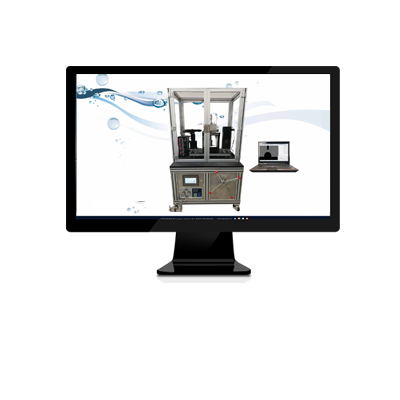
Liquid Method Contact Angle (LMCA) Measurement Method and Its Application Research
Abstract
In contact angle measurement, the contact angle is an important indicator of the interaction force between a liquid and a solid surface. For the study of the wettability of liquids, surface affinity, and the effect of surfactants, contact angle measurement is crucial. There are various methods for measuring contact angles, among which the Liquid Method Contact Angle (LMCA) measurement is an emerging technology. It is mainly used for accurate contact angle measurement in liquid environments, addressing the limitations of traditional contact angle measurement methods.
1. Introduction
The contact angle is the angle formed between a liquid drop and the solid surface, reflecting the affinity of the solid surface to the liquid. In traditional contact angle measurement methods, common techniques include the Sessile Drop method and the Captive Bubble method, which measure contact angles in gas and liquid environments, respectively. However, both methods have certain limitations, especially in liquid environments, where traditional methods may be interfered by capillary phenomena, evaporation, absorption, and nanostructures, leading to inaccurate measurements.
The introduction of LMCA measurement was to solve these problems in liquid environments, especially avoiding the interference from capillary phenomena, evaporation, etc., which occur in gas environments. LMCA analyzes droplet morphology using the MicroDrop method to accurately calculate the contact angle, providing more reliable data.
2. Basic Theory of Contact Angle
The contact angle is the angle formed by a liquid drop on a solid surface, and it is influenced not only by the surface tension of the liquid and the chemical properties of the solid surface but also by the shape of the droplet and external environmental factors. According to the Young-Laplace equation, changes in the contact angle can be explained by the droplet curvature, surface tension, volume of liquid, surface morphology, and environmental conditions.
2.1 Definition of Contact Angle
The contact angle is the angle formed at the point where the liquid drop touches the solid surface, typically used to characterize the affinity between the liquid and the solid surface. If the contact angle is less than 90°, the liquid can wet the solid surface well and is hydrophilic; if the contact angle is greater than 90°, the liquid cannot wet the solid surface well and is hydrophobic.
In the case of nanostructures, due to the effect of surface roughness, contact angle calculations usually require the Wenzel-Cassie model. This model states that the contact angle depends not only on the physicochemical properties of the surface but also on the roughness factor of the surface. At the nanoscale, the boundary between hydrophilic and hydrophobic contact angles is typically 60°.
2.2 Young-Laplace Equation and Droplet Morphology
The Young-Laplace equation is a key equation describing the relationship between surface tension and curvature of a droplet. It is widely used in describing droplet behavior on solid surfaces. The equation takes into account surface tension, liquid curvature, and the shape of the droplet. In practical applications, especially when studying complex surfaces or three-dimensional droplet shapes, the Young-Laplace equation often manifests as a system of differential equations, providing a more comprehensive description of droplet behavior.
2.2.1 Basic Form of the Equation
In the relationship between surface tension and curvature of a droplet, the change in contact angle with respect to the arc length can be described by the following equation:
dθ/ds = 2/R? + (Δρ * g) / σ * Z - sin(θ) / x (1)
where θ is the contact angle, R? is the initial curvature radius of the droplet, Δρ is the density difference between the liquid and the gas or water and oil, g is the acceleration due to gravity, σ is the surface tension of the liquid, Z is an influencing factor related to the arc length, and x is a geometric parameter related to the change in contact angle. This equation reveals how changes in droplet morphology affect the contact angle by combining factors like surface tension, gravity, and geometric factors, providing a comprehensive description of droplet behavior.
2.2.2 Influence of Droplet Geometry on Contact Angle
The morphology of a droplet directly affects the measurement results of the contact angle. During droplet morphology changes, the geometric changes in both the horizontal and vertical directions are closely related to the contact angle. The geometric relationship between droplet shape changes can be described by the following equations:
dx/ds = cos(θ) (2)
dz/ds = sin(θ) (3)
In these two equations, x and z represent the changes in the horizontal and vertical directions of the droplet, respectively, and the contact angle θ determines the magnitude of these changes. The change in contact angle is influenced not only by the change in droplet shape but also by factors such as surface tension of the droplet and the solid surface properties.
2.2.3 Changes in Droplet Volume and Surface Area
Changes in droplet volume and surface area are also closely related to the arc length. During the morphology changes of the droplet, its volume and surface area change with the arc length. The volume change of the droplet can be expressed by the following equation:
dV/ds = π * x2 * sin(θ) (4)
The change in surface area is given by the following equation:
dA/ds = 2π * x (5)
These two equations indicate how the morphological changes of the droplet affect its volume and surface area, thereby influencing the contact angle measurement. In LMCA, the geometric characteristics of the droplet are crucial in determining the accuracy of contact angle measurements.
3. Traditional Contact Angle Measurement Methods
3.1 Sessile Drop Method
The Sessile Drop method is one of the most common contact angle measurement methods. It involves placing a droplet on a solid surface and measuring the contour shape of the droplet to calculate the contact angle. This method is usually conducted in a gas environment, but in a liquid environment, capillary phenomena, evaporation, and other issues can affect the measurement results, leading to errors.
3.2 Captive Bubble Method
The Captive Bubble method involves placing a bubble in the liquid and observing its shape to estimate the contact angle. This method is usually applied in liquid environments, where the contact angle of the bubble on the solid surface is observed to determine the hydrophilicity or hydrophobicity of the surface. However, the Captive Bubble method can be affected by surface roughness and nanostructures, leading to measurement deviations, especially when surface microstructures are present.
4. Liquid Method Contact Angle (LMCA)
4.1 Principle of LMCA
Unlike the Captive Bubble method, LMCA calculates the contact angle by observing the contact angle differences above and below the bubble placed on the solid surface. Thus, LMCA eliminates the limitation of the Captive Bubble method, where contact angles cannot be measured above the bubble, providing more accurate contact angle values.
4.2 MicroDrop Method
The MicroDrop method is a common technique in LMCA. By depositing small droplets onto the solid surface and using image processing technology to analyze the droplet shape, researchers can accurately fit the contact angle. The MicroDrop method effectively eliminates the impact of capillary phenomena and evaporation, making it an important technique in LMCA.
4.3 Applications of LMCA
LMCA has wide applications in various fields, particularly in the following areas:
- Materials Science: Used for surface modification and studying the wettability of nanomaterials, helping design materials with specific surface properties.
- Biomedicine: Used to study the hydrophilicity and antimicrobial properties of biomaterials, aiding in the development of new medical materials.
- Environmental Engineering: Used for optimizing water treatment materials, particularly in the study of sewage purification and anti-fouling coatings, providing important surface performance data.
- Special Materials: For special materials such as contact lenses and orthopedic materials, contact angle measurements must be conducted in liquid environments. LMCA provides more accurate data in such cases.
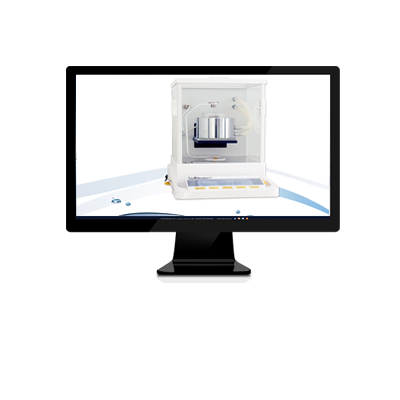
Non-contact nanoliter injection needle accessories used in LMCA


5. Experimental Methods and Data Analysis
5.1 Experimental Equipment
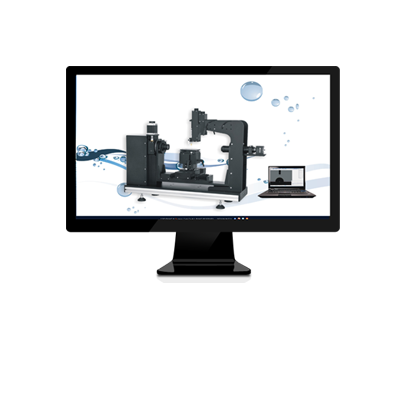
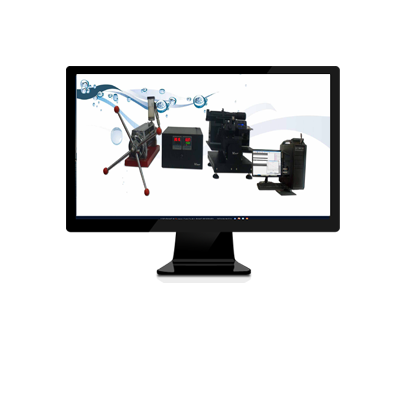
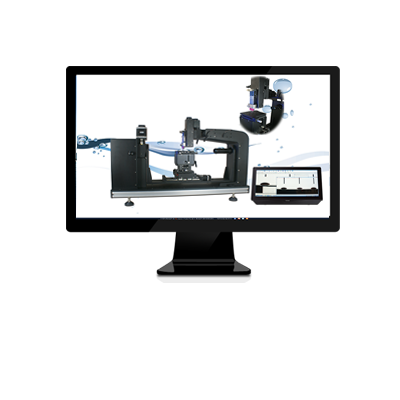
LMCA measurement requires specialized equipment such as a contact angle measurement instrument, microscope, and imaging system. By conducting experiments in liquid environments, the morphology of droplets or bubbles can be accurately observed, and contact angle data can be extracted using image analysis software.
5.2 Data Processing Methods
In MicroDrop experiments, liquid droplet morphology on solid surfaces is first obtained using image analysis techniques. Then, fitting algorithms (such as the Young-Laplace equation) are used to calculate the contact angle. Precise image processing and fitting techniques can eliminate experimental errors, resulting in more accurate contact angle data.
6. Advantages and Challenges of LMCA
6.1 Advantages
The main advantage of LMCA is that it can measure contact angles in liquid environments, avoiding the effects of capillary phenomena and evaporation present in gas environments. Moreover, the use of the MicroDrop method allows LMCA to provide more accurate data, especially for materials with complex surface characteristics, such as nanomaterials and thin films.
6.2 Challenges
Despite its advantages, LMCA still faces several challenges. The selection of liquids, control of experimental environments (such as temperature and humidity), and the accuracy of droplet morphology analysis all require precise control. External interference factors during experiments may affect measurement results, requiring researchers to have high technical proficiency.
7. Conclusion
LMCA, as a contact angle measurement technique in liquid environments, effectively overcomes many defects of traditional methods. Through technologies such as the MicroDrop method, LMCA provides more accurate measurement results and is widely applied in materials science, biomedicine, environmental engineering, and other fields. With the development of technology, the prospects for LMCA in surface science research will continue to broaden.